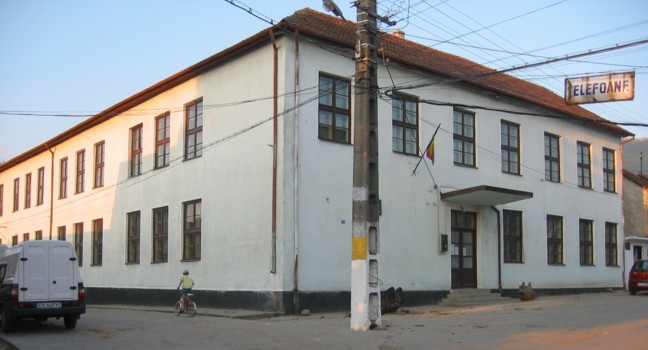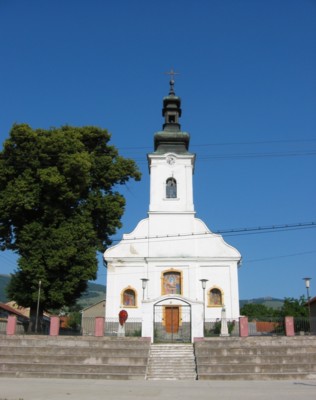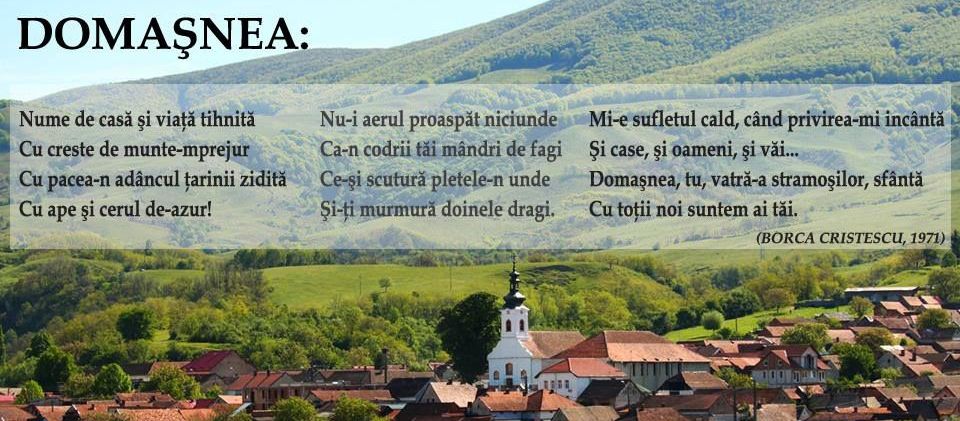
Domașnea lies at an altitude of 492 m, in the south-west of Romania, in the south-east of Caraș-Severin County, at the northern end of the Domașnea-Mehadia basin in the Timiș-Cerna corridor.
The village hearth covers 64 hectares. Its neighbours are Teregova to the north, Rusca to the north-east, Cornereva to the east, Cornea to the south, Mehadica to the south-west and Luncavița to the west. Domașnea is about 90 km from Reșița, the county seat, and from the nearest towns it is 45 km to Caransebeș and 25 km to the spa resort of Băile Herculane.
The name Domașnea comes from a Slavic language: the word "Domasch" means house, homely, gentle, dwelling, home. It took, however, the suffix [(n)ia] of Latin origin, which establishes its Roman parentage: the Latin "domus" has the same meaning as the Slavic "Domasch", which the villagers adopted for reasons of sound.
Based on a document published by the Hungarian historian Frigyes, it was once believed that the age of Domașnea could be traced back to 1436. More recent research, especially that of Dr. Dimitrie Roman, has brought to light a document showing that a group of houses existed within the village boundary as early as the year 159 AD. The document is a military diploma. When the Austrian authorities of the Banat Military Frontier built the Orșova-Caransebeș road, the foundation of a Roman entrenchment of 40 x 34 m was dug up, and in it a bronze tablet 95 mm wide, 60 mm high and 0.5 mm thick, a so-called "tabula honestae missionis", issued by order of Emperor Hadrian on 27 September 159 in the name of the veteran soldier Ivornecus, of Celtic origin. The tablet is kept in the Museum of Antiquities in Vienna, under number D.XVII.
In 1962 the village was collectivised. It was the only one in the area forced into this system (with some help from part of the villagers), and the consequences were disastrous, ruining both farming and the people.
The commune was a hotbed of anti-communist resistance in Banat.
Domașnea can be said to be the commune with the most university graduates per head in the country: over 300 people with higher education among the commune's 500 houses.