 In this week of great turmoil I had the privilege of reading a diary. And it did me a world of good. There were passages that brought tears to my eyes (I am the emotional kind who cries even at the national anthem).
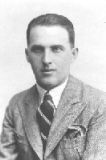
It is the diary of a man born in 1901. A man who lived through the Great Union, the First World War, the Second, and the coming of communism.
This man taught me a lesson about what love of country and of one's people truly means.
In 1919, when Caransebeș was still under Hungarian rule, this man, together with a group of classmates, put up the Romanian flag and the royal coat of arms on the "Traian Doda" High School in Caransebeș (at the time the Hungarian State High School, although it had been built at the wish of General Traian Doda, and funded by him, so that there would be a school teaching in Romanian, an obligation the Hungarians never fulfilled). Then, for days on end, they organised themselves into a group to defend the school's front from those who wanted to take the emblems down.
As a law student in Cluj he kept the Banat spirit alive and drew the elite around himself and his group of friends, starting various social and cultural activities, as was the student custom of the time.
His career took him to Zărnești (Brașov) and to Tulcea as a magistrate. He made an enormous contribution to those local communities through his intelligence and dedication, but above all through his honesty and love of his neighbour.
By far the most interesting part of his path was as secretary (and right hand) to the mayor, or mayors, of Timișoara. The Vienna Award of 1940 found him a civil servant at Timișoara City Hall. With wisdom he carried out all kinds of tasks: from securing the inventory of the Faculties of Agronomy and of Medicine and of the National Theatre and Opera of Cluj, which could have been in danger from Horthy's Hungarians, to running the social services of Timișoara at the time, handling the great wheat crisis right after communism came, promoting sport in Timișoara, and much more.
Guided by his faith in God, he never for a moment strayed from the firm principles of honesty and love of people, which, as could be expected, caused him great trouble once the communist administration took over. Would it not have been easier to go over to the communists to keep his post? Of course it would. Yet he did not. He resigned together with two friends who were key staff at City Hall, and in doing so saved 100 people at Timișoara City Hall from dismissal under an order to cut staff that had come from above (the order was cancelled by their resignation).
On the plot Timișoara City Hall had given him to build a house, he chose instead to build a social services hostel, which he put at the disposal of those in need. Left without a job and without a pension because he would not give in, he returned with his family to his native Domașnea. For a short while he became a farmer (but the communists, through collectivisation*, took his land too), then he worked as a miner on the railway tunnels at Poarta-Domașnea, Armeniș, Gârliște and elsewhere.
Instead of resting as he would have deserved, he devoted himself to still more public causes in the commune. He rallied the farmers, and together they looked after the cemetery, left neglected for decades; he organised the produce market and the cattle fair; they laid the foundations of the village school and built it (with the pupils of the time); they raised funds for the community centre and started the village water supply. The people of Domașnea also owe him the land registers, through which every inhabitant knows precisely, with documents, the boundaries of their farmland (divided into hayfields, arable land and so on) and of their house plots.
Dr. Dimitrie (Mitruț) Roman: a lesson in self-denial, love for others, honour and leadership. A man of Domașnea. (1901-1985)
The manuscript was given to me to read by his son, Mr. Mircea Roman, honorary consul of Romania in Canada.
Written by me, Tatiana Neamțu, from Domașnea, on 1 December 2024