The survivors of the Uță group continued to be supported by the local people, even as the terror spread everywhere. A witness from Domașnea (Petru Andrei) remembered:
"They [the authorities, editor's note] scared us that they'd throw us out of our houses and put us under forced residence. Out of fear, our old folk gave themselves up. They arrested my grandad, and there, at the Securitate, they pulled out his fingernails and toenails. Because he'd taken clothes and food to the partisans. The poor man, old as he was, did five years in prison. He couldn't read, couldn't even write his own name. Andrei Nicolae, that was his name. And they took my father to Timișoara and wrecked him there, at the Securitate. It was the day before Christmas. When he came home, his neck was like a chicken's you've taken the axe to. He couldn't even speak any more. He said they beat him with a rubber hose. There was great fear around here, in Domașnea. We weren't allowed out in the street, not even to fetch water. In the evening, after nine, if they caught us they took us off in a van and beat us till morning, so we'd tell them who we'd seen. Once they caught me at the village dance. They took me to the gendarme post to tell them about one Sfârloagă. I told them nothing. Seven officers sat at a table glaring at me. My heart was in my throat."
Atanase Serafim of Domașnea was also one of the partisans' supporters, and he was arrested by the Securitate:
"They put me in the Securitate, tied my feet and hands, pushed a pole between the ropes and turned me upside down. And they beat me so much [...] they even broke the teeth in my mouth [...] At the Securitate they put me in a cell and, believe me, I drank my own urine, because from the beatings my stomach burned so that I didn't know myself any more. They brought me a bucket half full of tar, and I relieved myself in it and then drank from it. I couldn't take any more, I couldn't hold out."
When they saw that beating got them nothing out of Atanase Serafim, the Securitate men tried bribing him with money, without success. He would get 25 years in prison. To cut the partisans off from any supplies, the Securitate forbade the locals to go to their "sălașe" (shelters where the mountain people kept their animals, in winter too). They were allowed to take only a slice of mămăligă (polenta) or a little flour to make food for the dogs. If they were caught with extra food, the beating began: "Bring out the partisans, damn you, or we'll kill you!" All through the summer of 1949 the mountain people were beaten so they would stop feeding the anti-communist fighters. Misleading the authorities, whether by mistake or on purpose, was promptly punished with beatings by the Securitate. The people most hated by the partisans and the locals were not the conscripts of the Securitate troops, but the militiamen and their informers. Some villagers became informers for the Securitate and the Militia for various reasons: out of fear, for money, some perhaps out of ideological conviction (communists). Sometimes the rewards on the partisans' heads were extremely tempting. For example Mitru Șarpocă, a hunter, wanted to get his hands on the 80,000 lei promised for each partisan captured. The Securitate troops were also accompanied in the forest by local activists of the Romanian Workers' Party, as was the case of Gârpina from Mehadica, the head of the local party cell.
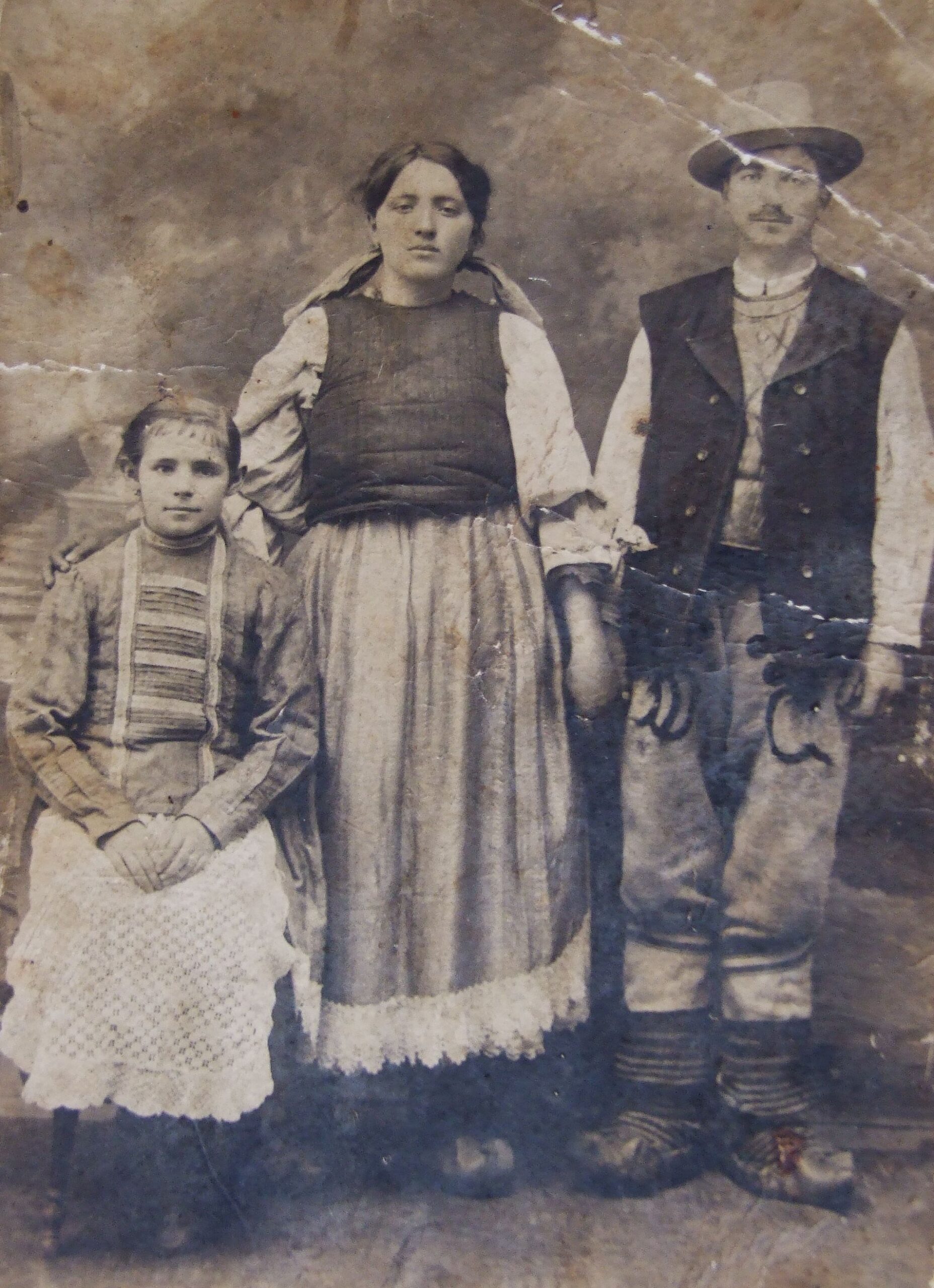
On the right, the parents of the Duicu brothers
The partisans were helped with food, clothing and information by their families and by loyal fellow villagers. Such was the case of Lică Ștruț of Domașnea, "a poor man but kind-hearted", who worked at the post office. Witnesses say these partisans stole nothing, although during the interrogations they had to claim they had, so as not to denounce their benefactors. Shrinking the anti-communist fighters' base of support was one of the means by which the Securitate sought to wipe out the resistance. To this end about 100 people were arrested in the commune of Domașnea alone, and people were moved from their mountain shelters down to the villages together with their cattle, where they had no way of keeping them. The partisans' families were beaten to make them say where the fighters were hiding, as happened to the mother of the Duicu brothers. She too was arrested and taken to Lugoj. To withstand the torture the Securitate put her through and to save her children, she pretended to be mad. Samuilă Duicu, known as Boieru, brother of the partisans Ion, Nistor and Petru Duicu, was also involved in the resistance, though he was not in the mountains. Probably because of the harassment, he left for Timișoara and tried to get a job with the tram company. But he was arrested and sentenced to three years in prison, and after serving them he was sent into forced residence.
Not only relatives but the partisans' other supporters were tortured too. Gheorghe Benghia fell because of an informer in September 1950, when he was only 19. These were terrible moments, vividly described by the man who endured them: "I was arrested, beaten, and not just beaten: pulled by the hair, tortured, and my toenails pulled out by Zăbală", a Securitate officer in Lugoj. The trial brought him a 12-year sentence, served in full at Caransebeș, Timișoara, Văcărești, Gherla, the Baia Sprie mine, Aiud, Galați and Botoșani. His release on 28 August 1962 brought him into contact with a Romania that proved hostile to former political prisoners. After the fall of communism he learned that his main torturer during the interrogation, Zăbală, "is now in Lugoj and has a good pension, and he's fine. And I'm still with the illnesses I've had since I came out of prison; just now [at the time of the interview, editor's note] I've been in hospital with TB for 2 months, and I also have diabetes, which I can't get rid of."
Material taken from: Dorin Dobrincu, The Resistance Groups of Banat (1949-1954): "The Remnants of the Ion Uță Group: The Resistance Groups of Banat Led by the Duicu Brothers, Dumitru Mutașcu and Dumitru Ișfănuț (1949-1954)"
The photograph was kindly provided by Petru Duicu (Boeru).