For many years, important episodes of Banat's past were deliberately kept silent, "episodes that are so many answers to the question some people, still puzzled, ask even today with apparent innocence: why was it necessary for Romanian communism to collapse first in Banat? Searching back through time, we will easily see that the 'foreign agents' of Timișoara were in fact those who wanted, just as fervently, exactly what the partisans of Domașnea, Teregova, Rusca wanted... the dignified Romanian world of the Banat villages, upon which the destructive hurricane of communism and collectivisation fell; only these were not granted the chance to shout their will for freedom at the top of their voices in Opera Square in Timișoara, for the whole nation to hear... for them were destined the cellars, the mines, the Canal and, for far too many, the cross, the only deliverance..." writes Miodrag Milin in his book "The Anti-Communist Resistance in the Banat Mountains".
From 1946-1947 on, Domașnea was one of the most important centres of anti-communist struggle in the Banat Mountains. Many sacrificed themselves for this cause, and just as many were imprisoned for the same belief. It is said, and it is indeed so, that every family or house in Domașnea had someone "at Gherla", "at Aiud", "at the Canal" or "in the Bărăgan"!
On this page we try to piece the past back together, so that today's young people may know and value their grandparents and great-grandparents.
We will begin by naming the bravest of them, those who fiercely opposed the demon called communism!
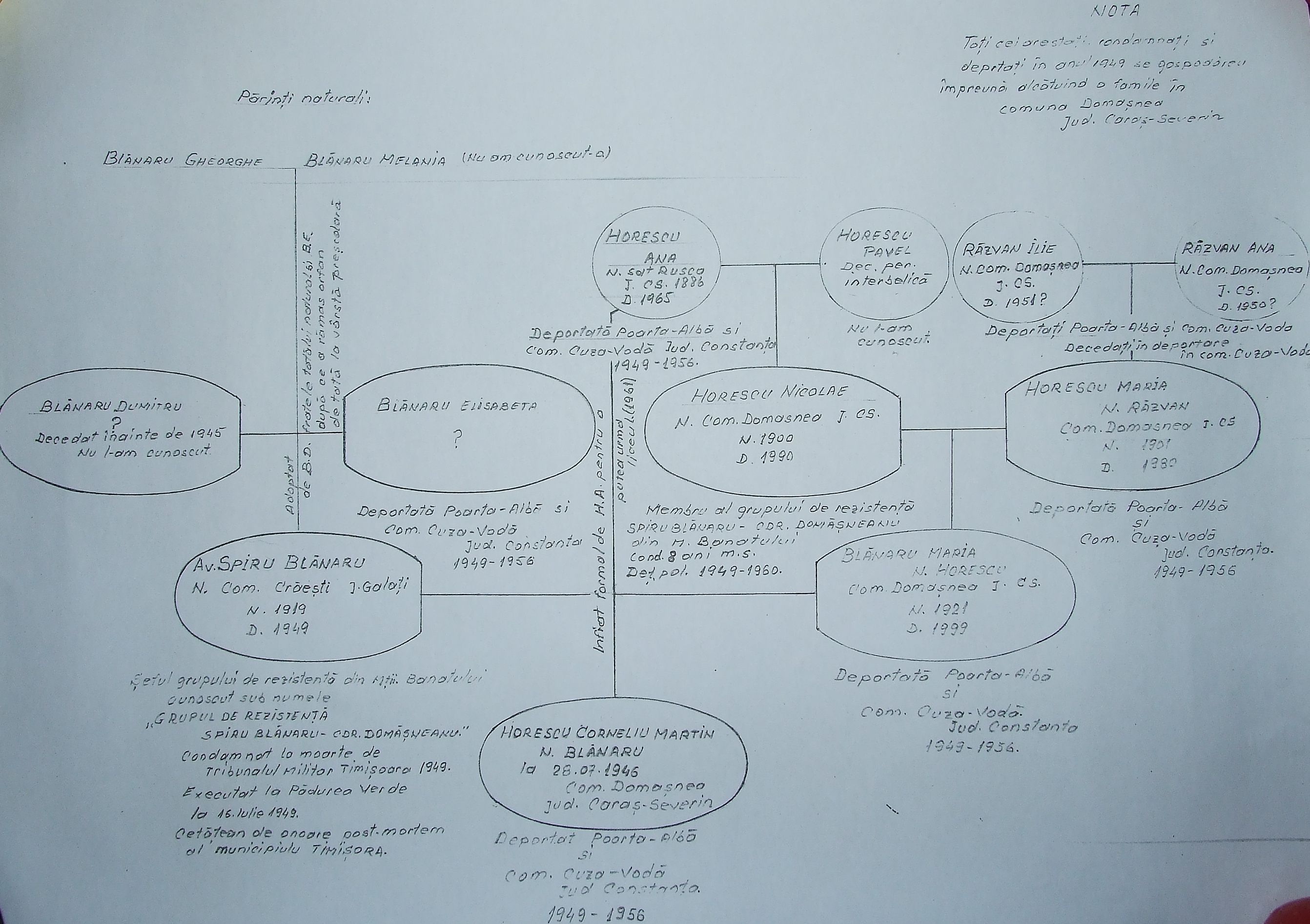
Gheorghe Benghia; Spiru Blănaru; Gheorghe Munteanu; Gheorghe Cristescu, known as Galea; Ilie Cristescu, known as Voica; Anișoara Horescu; Nicolae Horescu; Ion, Petru and Nistor Duicu, known as Boieru; Dumitru Ișfănuț, known as Sfârloagă; Petru Pușchiță, known as Mutașcu; Vichenta Pușchiță; Constantin Românu; Nicolae Românu; Petru Românu, known as Petru Partizanu; Gheorghe and Nistor Urdăreanu.
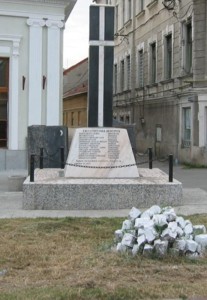
In Caransebeș, "the Town" as the Banat mountain people call it, a monument was raised in memory of those who gave their lives for the freedom and honour of Romania.
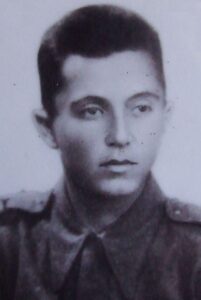
Among those named on it are several people from Domașnea: Ilie Cristescu-Voica, Ion Duicu, Nistor Duicu, Gheorghe Urdăreanu and Gheorghe Cristescu-Galea, fallen in battle; Petru Pușchiță-Liber and Dumitru Ișfănuț-Sfârloagă, executed without trial; Spiru Blănaru and Petru Pușchiță-Mutașcu, executed after sentencing.
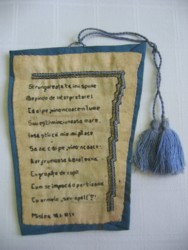
A poem dedicated to Anișoara Horescu:
"The gap between your teeth tells me
(Depending how you read it)
That you've a come-hither charm
Or that you're a great liar.
But you know that I like
To say you've a come-hither charm.
Yet, lovely Banat girl
With a child's dimples,
How does a partisan get along
With the weapons of sex appeal?"
Mislea, 18 January 1951
A poem written in Mislea prison by another student. With no pencil or paper, the poem was embroidered on cloth, as can be seen in the photograph. We thank Anișoara's son, Nicolae Olteanu, for letting us have it.